The Disastrous Alexandra "Sasha" Latypova
A case study in how bad analysis becomes viral, and poisons accountability
I’ve recently alternated between data analysis, and scrutinizing, with a few close colleagues, prominent COVID-vaccine “opponents,” because I don’t think the two issues can be separated.
Even when safety advocates win a few battles, it sometimes seems like we’re losing the fights that actually matter: transparency, stronger institutions, meaningful freedom of speech, and accountability for COVID-era abuses.
A major reason is that some high-profile voices repeatedly circulate exaggerated, sloppy, or outright grotesque claims, which “fact-checkers” and pharma-aligned actors then use to push the idea that “antivaxxers are crazy” - while conflating “junk claims” with serious and credible, well-substantiated criticisms. Many people repeat these arguments in good faith, and by the time the problems are spotted, the damage is already done, because most readers don’t have the time, training, or access needed to verify complex data.
As a result, while some progress is visible in the U.S., the legal landscape worldwide remains extremely grim. Many legal efforts I’ve reviewed have been weakened from the outset by claims that are easy to dismiss and hard to substantiate.
That’s why I’ll continue to focus both on the evidence and on the public figures who consistently degrade its credibility. In that spirit, this article offers a detailed portrait of Sasha Latypova, using her public statements and supplementing them with OSINT and information obtained from various sources.1
We’ll then document several lies. Using transcripts and a timeline of the main points she has promoted since becoming active in the COVID-19 space, we’ll observe which arguments she was contaminating, and when.
For readers who haven’t closely followed who said what, when - and in response to whom - this article aims to make the record easier to review, with direct receipts.
Birth in Ukraine
Sasha (nickname for “Alexandra”) was born on November 20, 1971, in Zaporizhzhya, Ukraine, the daughter of Vera Stepanivna (née Kovzko), a piano teacher, and Yevgeny Latypov.
Her father’s family, of Tatar origin, had emigrated from Russia and did not speak Ukrainian. Her mother’s family - although settled for a time in Zaporizhzhya - was of Russian origin and likewise did not speak Ukrainian. Her father had no home of his own when her parents married, so the couple settled in the apartment of her mother’s parents, Stephan and Ekaterina.
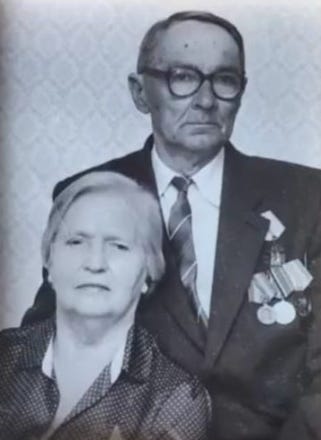
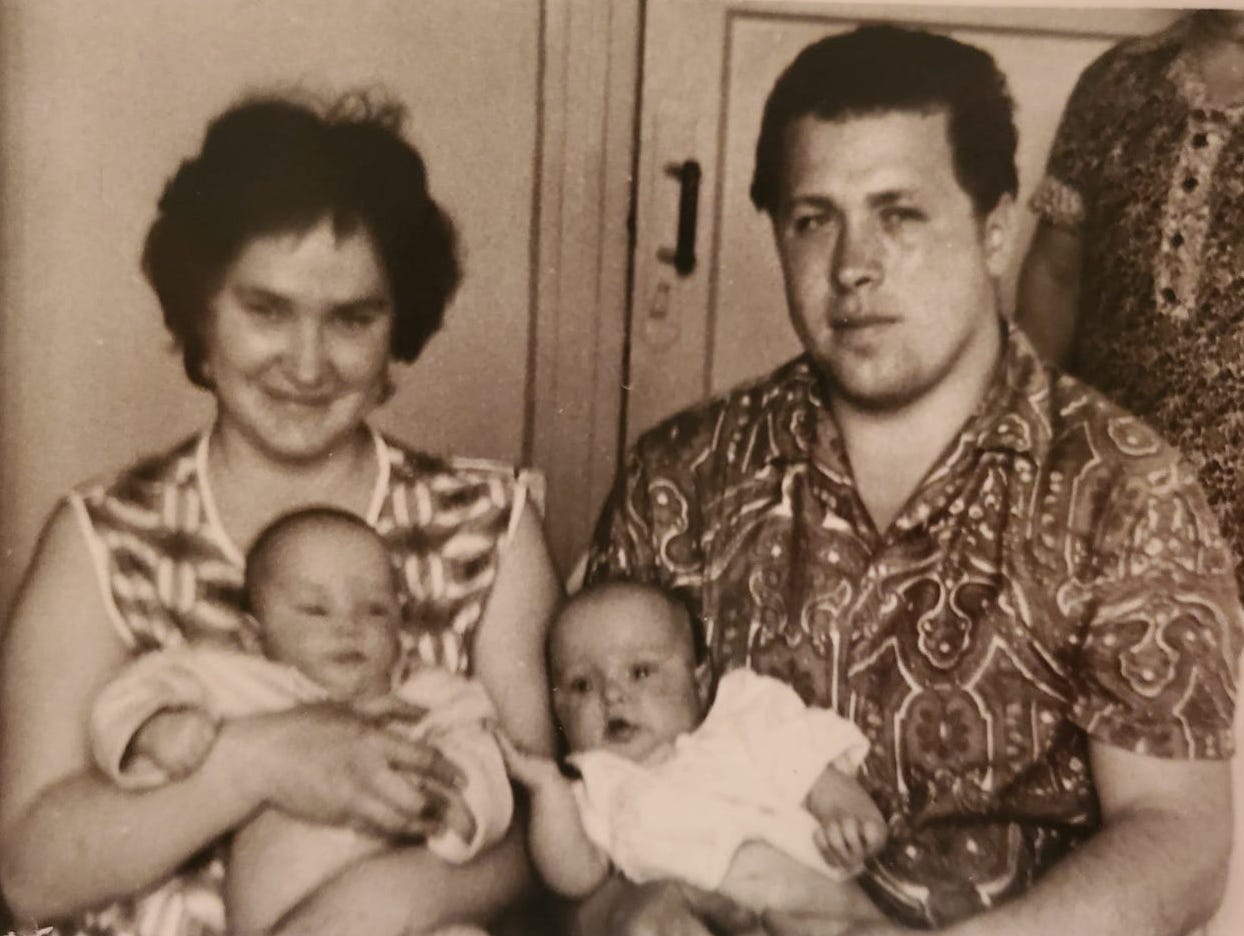
Sasha, and her twin sister, were born extremely prematurely, at just five and a half months, after their mother experienced a threatened miscarriage associated with kidney failure, reportedly linked to inadequate food.
Her mother, aged 25, wouldn’t have been able to carry another pregnancy due to negative rhesus issues & her ongoing pregnancy difficulties. A neighbor, Nina Ivanovna, head of the hematology department at the Children’s Regional Hospital, took pity on her and used her influence to help have the twins admitted to the hospital, despite the usual threshold of six months’ gestation for attempted neonatal care.
Sasha was the healthier of the twins, weighing 1.4 kilograms (just over 3 lbs). Her sister weighed 200 grams less, and for months - in under-resourced Soviet Ukraine - it was uncertain whether the babies would survive.
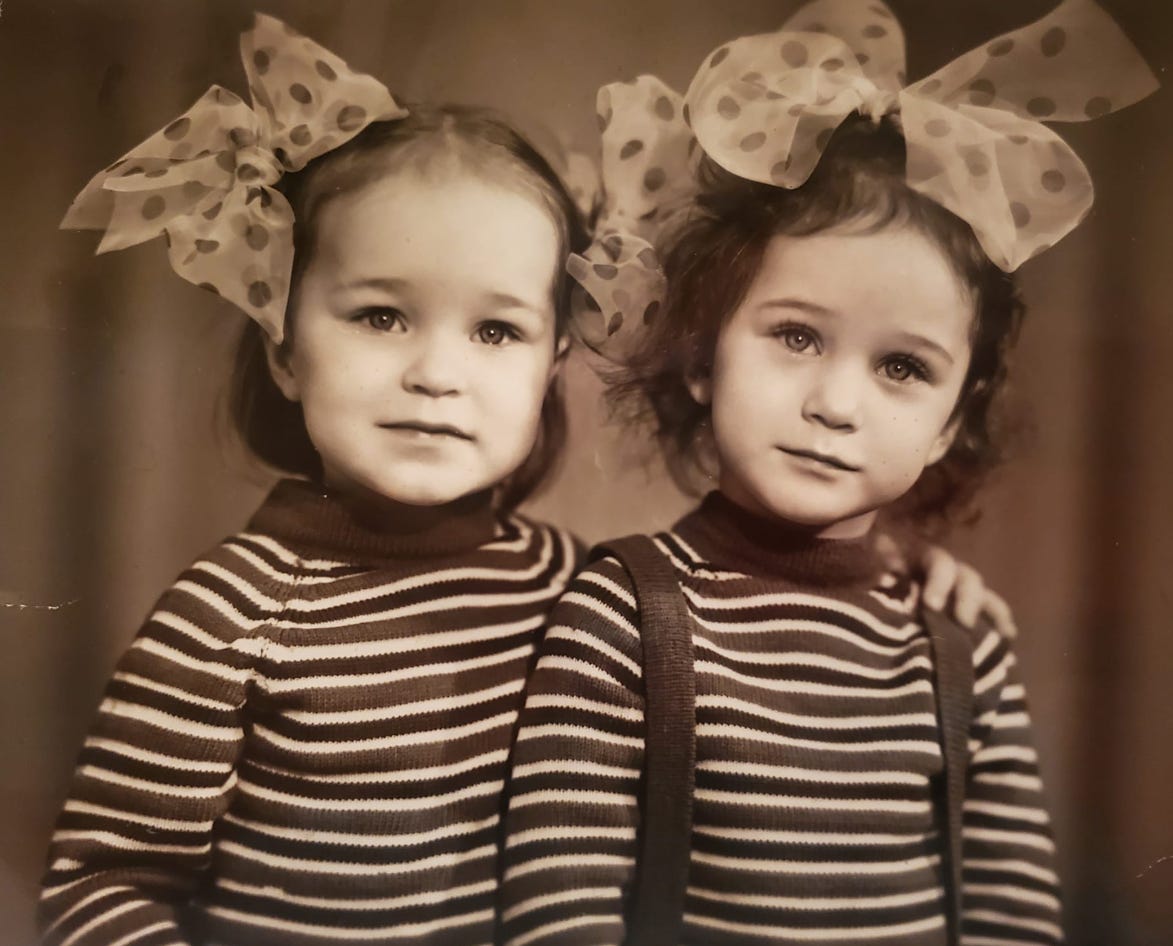
It took until age two for their hair to begin growing. Despite this difficult start, both grew without later developmental issues, contrary to what doctors had feared. When the twins were three years old, their grandparents moved out, leaving the apartment to the family. By age four, Sasha - a bright child - was already reading fluently.
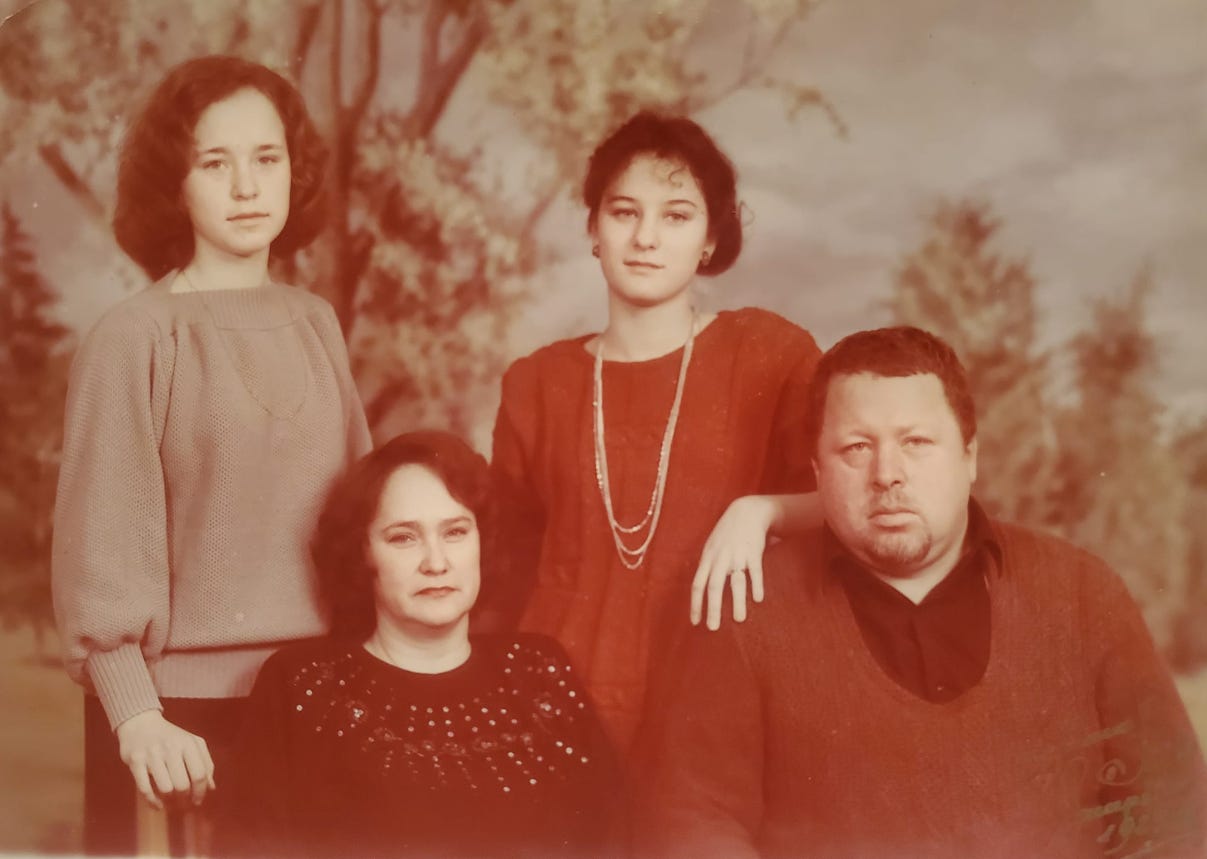
Starting in 1984, she spent holidays in Russia, where her paternal grandparents had returned.2 She traveled frequently with her family, mainly to countries within the Eastern Bloc.3
She also attended selective schools with advanced English and math/physics programs.4 She later recalled that in 1988 she was reading Orwell’s 1984 during physics class.
Leaving Ukraine for the U.S.
She refined her English in Kyiv, studying at the Kyiv Pedagogic University for Foreign Languages from 1989 to 1994, during the turbulent early years following the USSR’s collapse. This period involved severe economic disruption, including high unemployment, very high inflation, and currency instability until the hryvnia was introduced.5
The twins both dreamed of joining the United States. Fortunately, Sasha’s family had developed relations - among them the US ambassador, William Green Miller6 (pictured with Sasha on the 3rd picture below, in a 1996 ball at the U.S embassy).
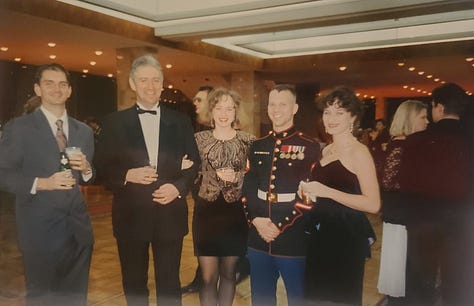
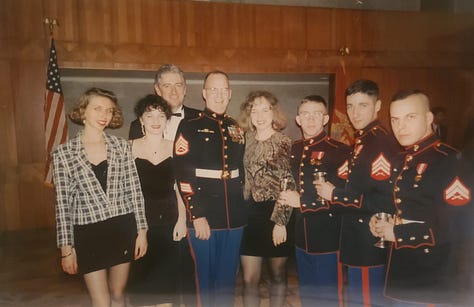
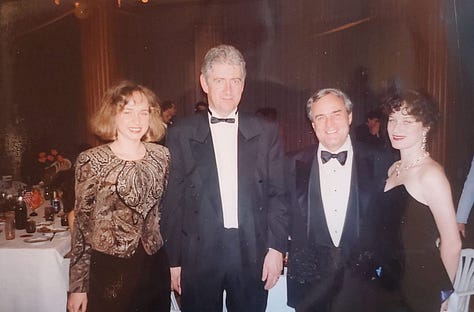
Sasha was the first of the twins to obtain a U.S. visa and a scholarship. She was accepted to the Tuck School of Business at Dartmouth, where she studied from 1997 to 1999,7 8 and earned an MBA.9
At Tuck, and meeting Jan Mikael Tötterman
While at Tuck, she met Jan Mikael Tötterman, her future husband.
Before enrolling at Tuck for his MBA in overlapping years with Sasha, Jan Mikael attended Brighton High School from 1986 to 1989,10 where he met his friend and future business partner, Russian-born Alex Zapesochny. He later earned a BSc in Management Science and Engineering at Stanford University (1989-1993). He then began his career at Gemini Consulting (1993-1996) before enrolling at Tuck (1996-1998).
Jan Mikael is the son of Saara Tötterman, PhD, who at the time was an emerging authority in radiology and a professor at the University of Rochester. She later played a significant role in her son’s - and her daughter-in-law’s - professional trajectory, so a brief profile is warranted.
Saara Tötterman and the University of Rochester
Saara Marjatta Sofia Tötterman (née Teppo) was born in Finland on February 10, 1941. She earned a Bachelor of Science from the University of Turku and an M.D. from the University of Oulu.
Her son, Jan Mikael, was born July 28, 1970.11
From 1979 to 1981, she completed a radiology residency at the University of Helsinki and appears in research papers during that period with affiliations to the Department of Surgery and the Department of Pathology.12 13 14
She later earned a Ph.D. at the University of Bergen (Norway), completed in 1983.15
She moved to the United States and became a U.S. citizen in 1987.16
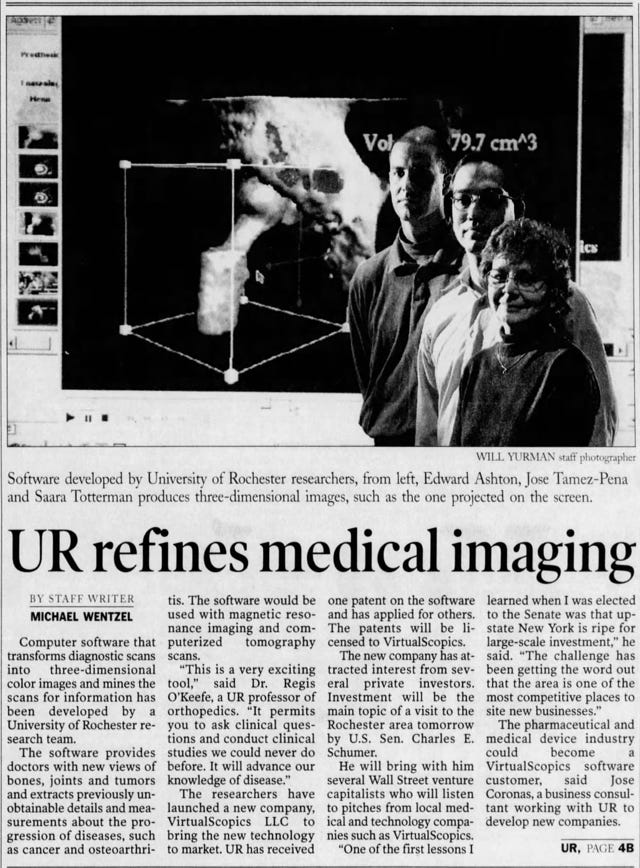
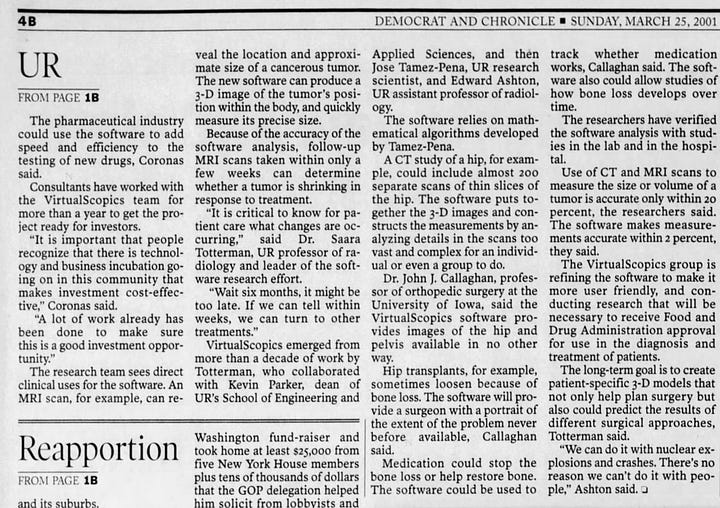
In the mid-1990s, she began collaborating with Kevin Parker (then dean of the University of Rochester’s School of Engineering and Applied Sciences).17 Tötterman became Director of the Magnetic Resonance Center and a Professor of Radiology at the University of Rochester. Working with Parker, she also collaborated with José Tamez-Peña and Edward Ashton.
That collaboration led to patented technologies for analyzing CT, MRI, PET, and ultrasound data. This research foundation later led her to co-found VirtualScopics in 1999.18 19 The first product, developed by Tötterman, Tamez-Peña, and Ashton, was described as software that converts diagnostic scans into three-dimensional color images and extracts quantitative information from them. It had been developed by the University of Rochester, and was patented by VirtualScopics.
Early Career, Sasha meets Pfizer
Back at Tuck in the late 1990s, Jan Mikael finished a year before Sasha and joined Boston Consulting Group (BCG) from 1998 to 2000. If you’re unfamiliar with BCG, you can listen to Sasha’s own explanation here.
If you are familiar with BCG, the excerpt is still worth hearing, because it illustrates what I see as a notable omission: she does not mention that her husband was working there at the time. The clip is from a recent interview with her close associate Jane Ruby.20
After finishing school in 1999, Sasha was able to bring her twin sister to the United States.
With Igor Lutvak, another Russian-born student at Tuck, she registered Rubicon Software LLC in Massachusetts under registration no. 000685265. The company remained active until it was involuntarily dissolved in 2009.21
In 2000, Sasha and Jan Mikael married.22 They had a son in January 2002, named Mikael (after his father) and Stephan (after Sasha’s maternal grandfather).23
From 1999 to 2002, Sasha worked in Boston at Analysis Group, Inc. as a manager in its healthcare practice, while Jan Mikael moved from BCG to 3Com Ventures.24 In that role, Sasha says she advised pharmaceutical clients on product and market development.25
In 2002, Sasha and Jan Mikael joined VirtualScopics, the company of Jan Mikael’s mother, Saara Tötterman.26 27
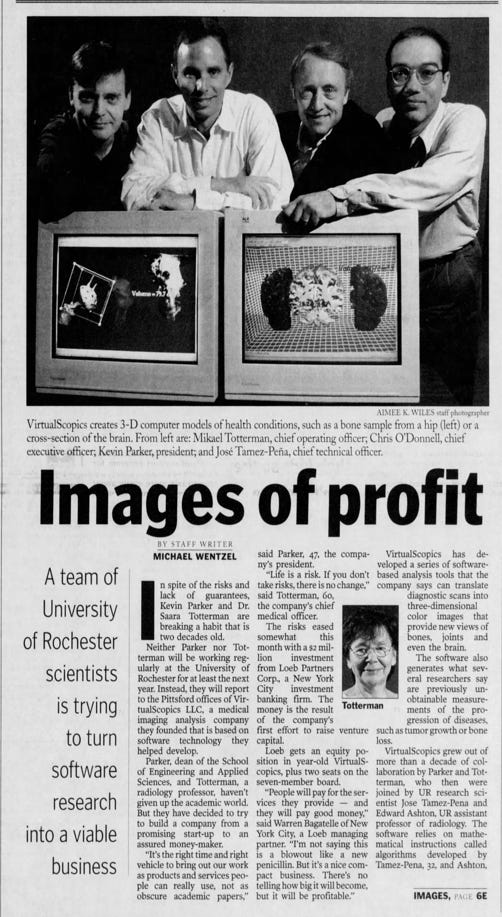
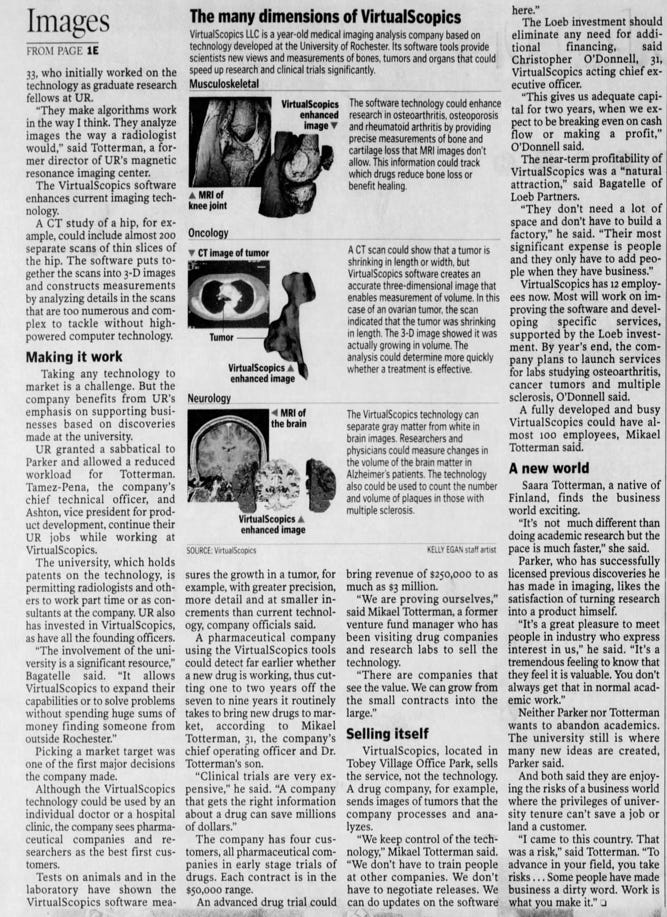
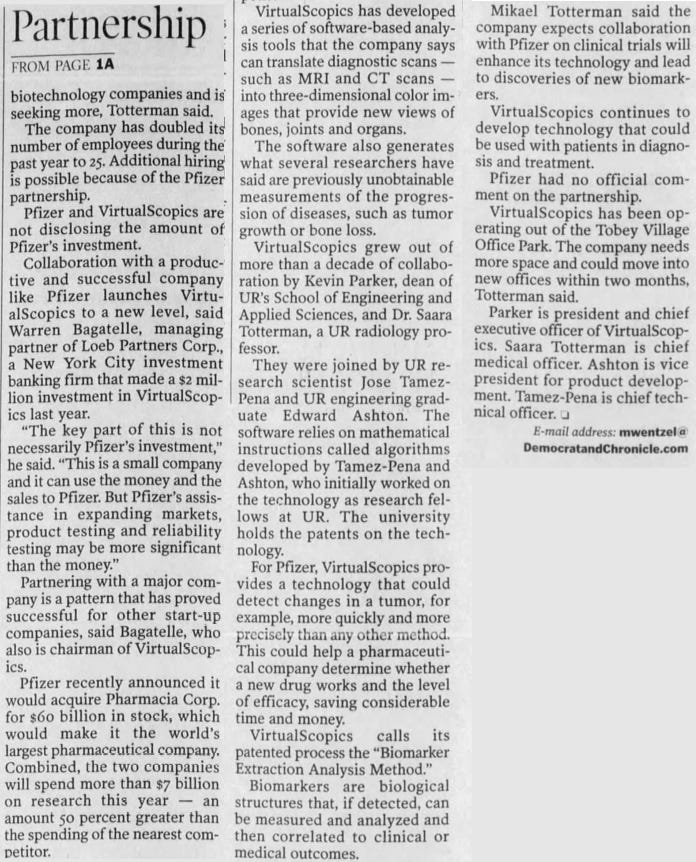
According to her CV, Sasha was responsible for developing a “structured strategic alliance with Pfizer” and for establishing a strategic research alliance with General Electric focused on diagnostic applications.28 The Pfizer partnership was either already in place when she arrived or was secured very quickly in 2002, given that it was announced in July.29 30

In September 2004, Sasha and Jan Mikael’s second child, a daughter, Sophia, was born.31
In 2005, VirtualScopics - reporting $17 million in new contract awards - went public at a $105 million valuation.32 In 2006, the company signed a major deal with GSK.33
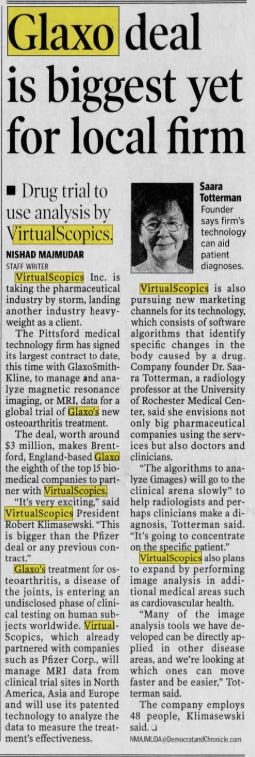
A few months after the GSK deal, Sasha and Jan Mikael left VirtualScopics. Saara remained with the company until 2008, when she unsuccessfully challenged the board’s control, and was subsequently bought out of the company she had co-created.34 35
ICardiac
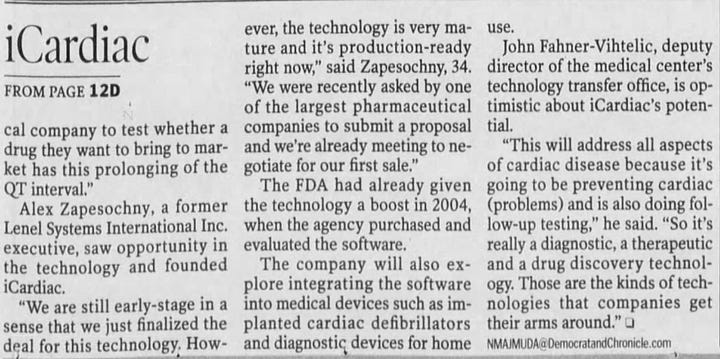
In October 2006, Sasha and Jan Mikael co-founded iCardiac. In addition to the Latypova-Tötterman couple, the company was founded with their friend Alex Zapesochny.36 37 The idea was that after several drugs had been linked to fatal cardiac events - such as Vioxx, fen-phen, and Seldane - there was a growing need for tools that could detect adverse cardiac effects associated with medications.
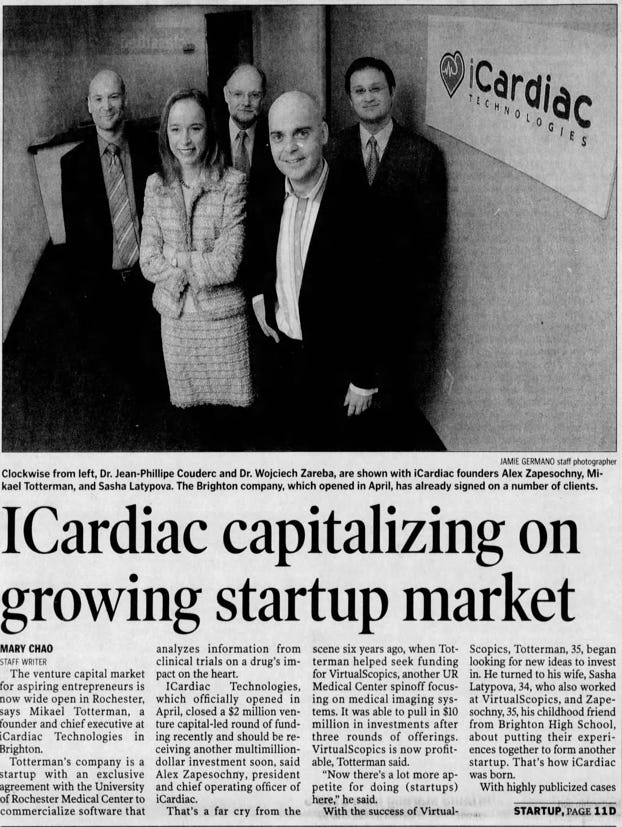
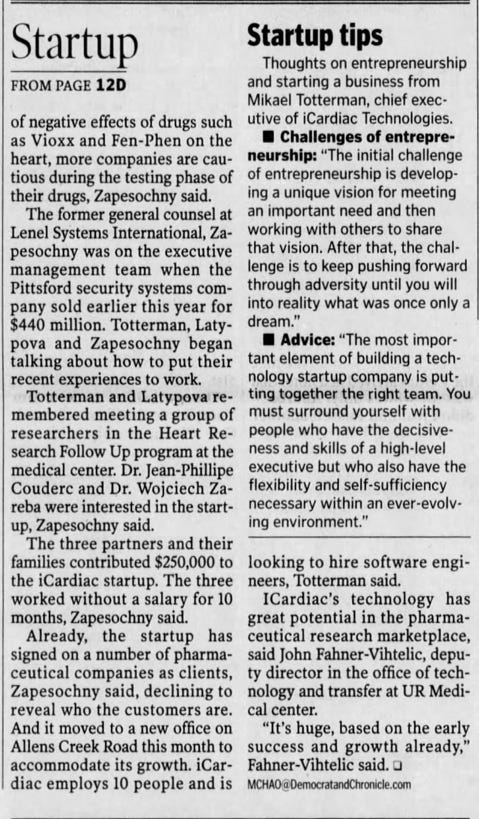
Consistent with the Totterman tradition, iCardiac secured, at its inception in 2006, exclusive rights to software developed by University of Rochester’s Wojciech Zareba and Jean-Philippe Couderc - who went on to become iCardiac’s CTO.38 39
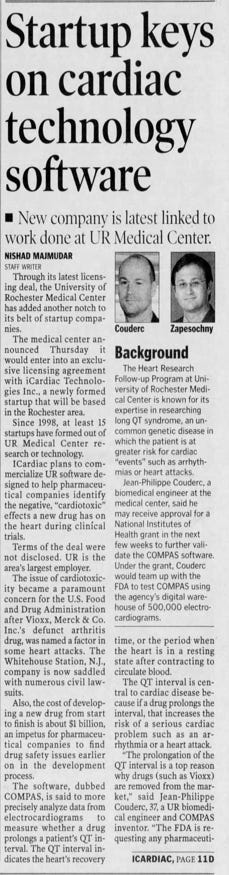
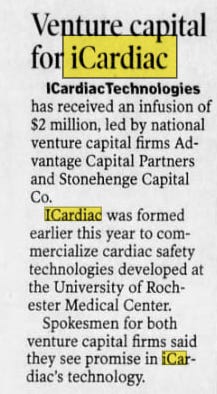
The company raised $2 million in November 2006 from the venture capital firms Advantage Capital Partners and Stonehenge Capital Co.40 Trilium Group also became a later investor, at an undetermined date.
In January 2007, faithful again to the Totterman tradition, Pfizer partnered with iCardiac.41 42

Later in 2007, Sasha and her partners reported that their software could be used to predict a participant’s risk of developing drug-associated cardiac issues at enrollment, based on preliminary testing.43 44 This also raises a concern: whoever controls that testing essentially controls what drugs are approved at the FDA. Should a pharma company want to pass a dangerous drug, they might only have one company to bribe and we would have another Vioxx epidemic on our hands.
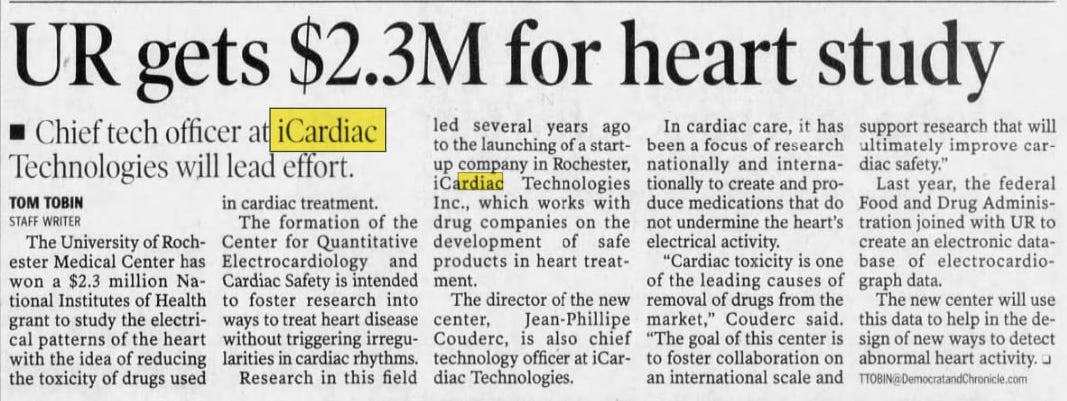
In 2009, the University of Rochester received a $2.3 million grant for a cardiac study, which led to the creation of the Center for Quantitative Electrocardiology and Cardiac Safety, led by Jean-Philippe Couderc, iCardiac’s CTO.45
iCardiac opened offices in Poland, Russia, and Vietnam. It recruited Thuan Pham, who later partnered with the group in other ventures.46
In 2010, the company received a $100,000 state loan.47

Sasha and Jan Mikael sold their shares in iCardiac in March 2014, as the company was taken over by Norwest Venture Partners (Palo Alto). Alex Zapesochny became CEO as Sasha and Jan Mikael exited the company.48

Sasha, on X, mentioned that she cleared from the sale “a 9 digits number”…49 that she quantified at “$230 million”.50
In 2014 still, she bought a house in Angwin, CA, estimated around $2 million.51
Innovocracy
In 2012, Sasha and Jan Mikael, together with other entrepreneurs such as Richard Glaser - an investment banker at Merrill Lynch - launched Innovocracy.org, a crowdfunding website developed in partnership with the University of Rochester, Cornell University, and Clarkson University, and supported by the Kauffman Foundation.52 53 54
One of the first projects to apply for funding was led by Jean-Philippe Couderc, their colleague and CTO at iCardiac.55
Despite positive press coverage in 2012,56 57 and funding for some projects,58 the initiative appears to have been abandoned relatively quickly.
Clerio Vision
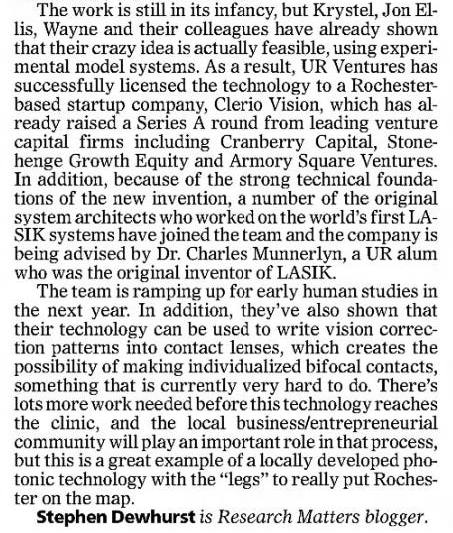
At this point, readers will be surprised to learn that in 2015, in partnership with the Center for Electronic Imaging Systems, and based on an idea developed by researchers at the University of Rochester,59 Jan Mikael Tötterman, Sasha Latypova, and Alex Zapesochny founded Clerio Vision, a company developing avC laser technology intended to reshape the cornea and correct common vision problems.60
Clerio Vision raised early capital from Cranberry Capital, Stonehenge Growth Equity, and Armory Square Ventures.61
According to Sasha’s CV, she left her executive vice president role in 2016 but remained on the board of directors to the present, an activity for which she says she was paid “$300/month.”62
If she retained equity, she could still benefit substantially from a future sale or liquidity event.
Retirement & Launching “Soph’s” career
Sasha invested in a water company,63 acquired several properties, and describes herself as semi-retired.
She may also have invested in the Harvest Inn, a vineyard hotel in Napa Valley. I have not found definitive documentation of ownership, but she appears on the hotel’s website with her husband and daughter,64 and she has repeatedly discussed spending time in the valley.65

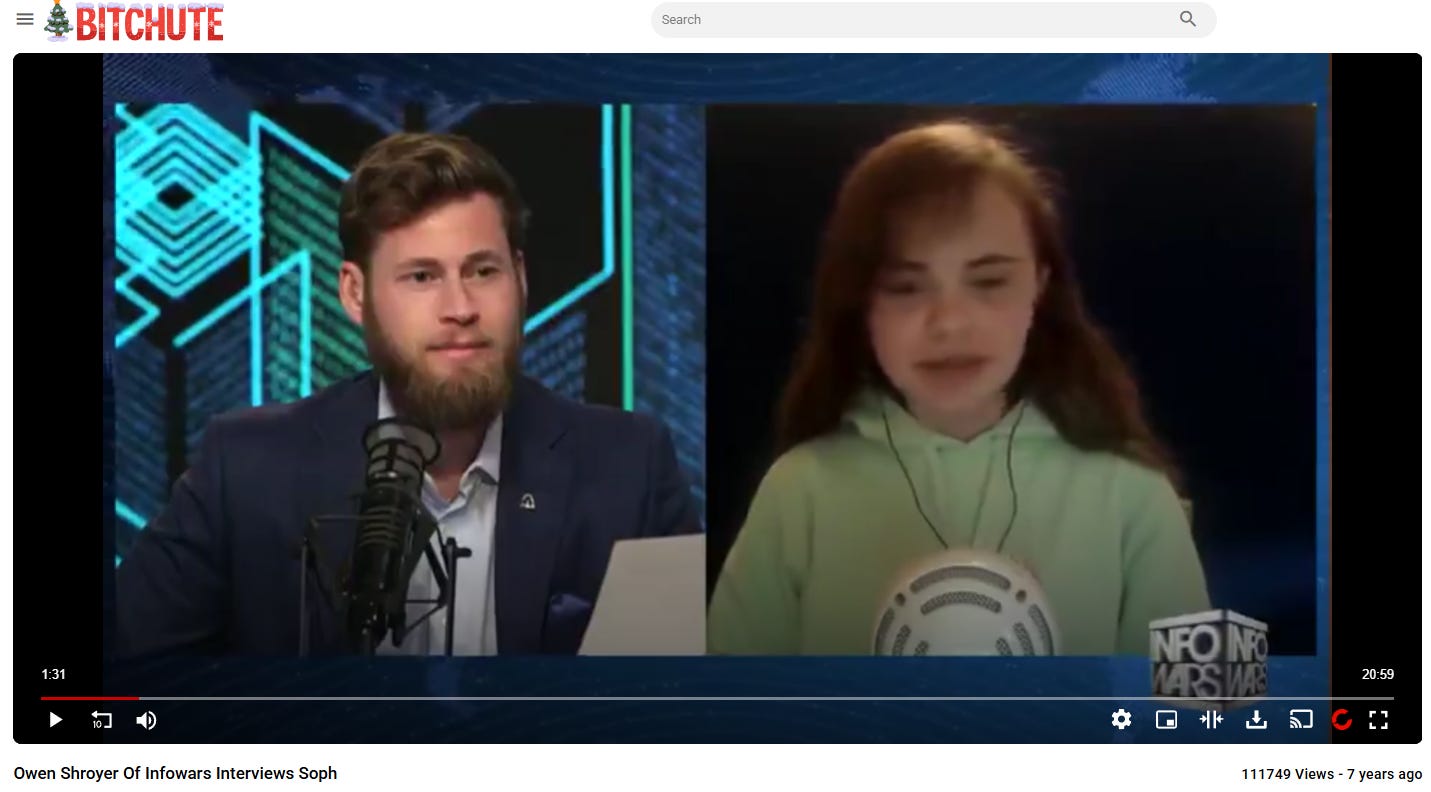
Starting in October 2015, she helped her daughter, Sophia, build a YouTube presence under the pseudonyms “LtCorbis” and later “Soph.” This rabbit hole is not the focus of the article, but this video provides a useful overview of Soph’s online trajectory.
It is relevant here, however, that Soph’s content shifted from children’s gaming commentary on games like minecraft in 2015, to more mature and violent content in 2016, to far-right political content by 2017.66
At its peak, Soph’s audience approached one million followers. From 2017 onward, she conducted multiple livestreams with Nick Fuentes and,67 after several strikes - beginning with her “Be Not Afraid” video - was suspended from YouTube. She remained active online into the pre-COVID period and was the first of the family to be widely publicized by Alex Jones’s InfoWars, on May 20, 2019.68
The COVID era: Sasha on Telegram
Sasha became active in the “conspiracy” sphere via Telegram in early 2021. Her account, “Cancelleduser,” is first observed (in the material I reviewed) in February 2021, in 9/11-related channels.
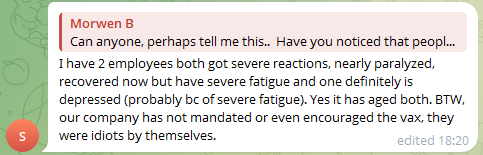
In another Telegram group, “COVID-1984,” her first comment is dated July 5, 2021 - roughly seven months after the start of the vaccine rollout - where she said that two of her employees had severe reactions to COVID-19 vaccines.69
Later that month, on July 29, 2021, she promoted the claim of “graphene in the jabs,” the first of many instances documented in this article.70
She later became a co-admin of the channel and used moderator privileges to delete substantial portions of conversations, threads in which other users challenged her nastiness. She also repeatedly made dismissive comments about vaccine-injured people.71 72 For these reasons, she was removed as an administrator by the other admins.73


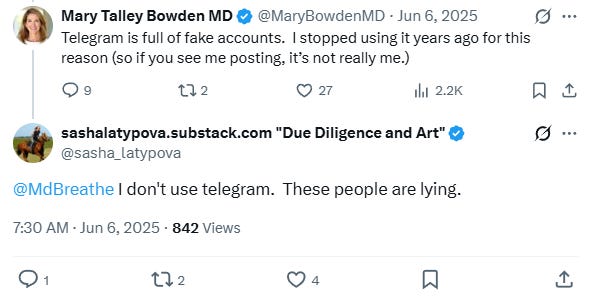
When confronted about her Telegram activity, she said on June 6, 2025, that she was not using Telegram.74
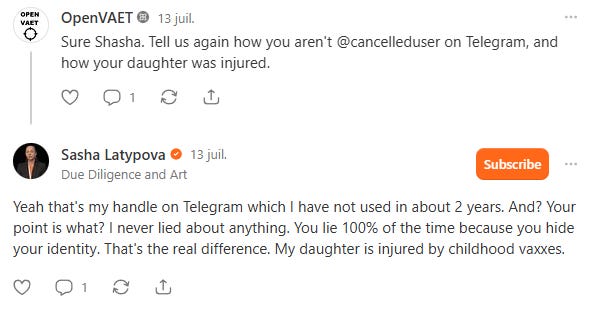
She acknowledged later, on July 13, 2025, that the account was indeed hers.75 (This lie was already difficult to reconcile with other public activity, including Jane Ruby identifying and tagging that account on her own channel,76 77 and reports from multiple associates who recognized the account.)
The Telegram account (ID 1504224617) remained active at the time of this writing as can be verified by any Telegram user.78
EMA covid-19 data leak
In November 2020, internal EMA review documents and screenshots of emails involving regulators were leaked online. On December 9, 2020, the EMA publicly reported the cyberattack.79
In March 2021, The BMJ published an article by Serena Tinari discussing findings drawn from the leaked documents, including evidence of substantial variability in early Pfizer batches and indications of manufacturing-process instability while process changes were being implemented around the time of the EUA.80
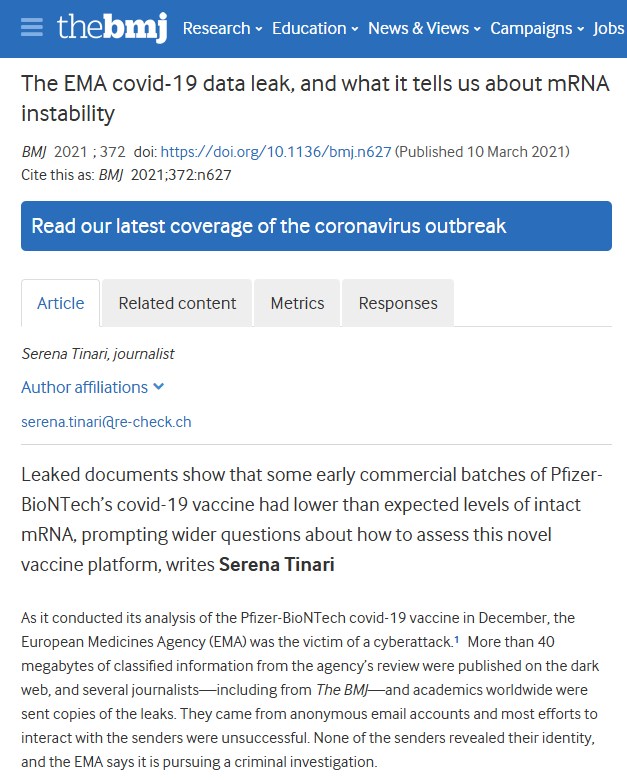
The leaked materials provided unusually detailed insight into internal exchanges between regulators and the manufacturer, and into discrepancies between public messaging and the issues they were discussing privately.
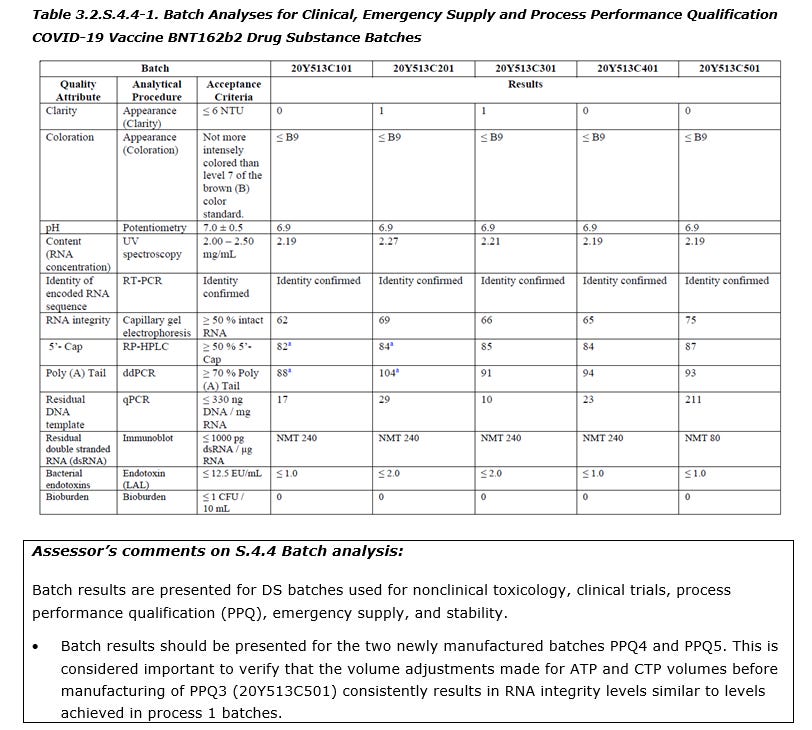
From this article on, it became obvious that severe manufacturing problems, inducing considerable batches variability, had impacted the development and the commercial releases.
“Batches analysis” and early allies
On October 31, 2021, Sasha published her first COVID-19 vaccine–related article on Exposé News as part of “Team Enigma.”81 82 83 84
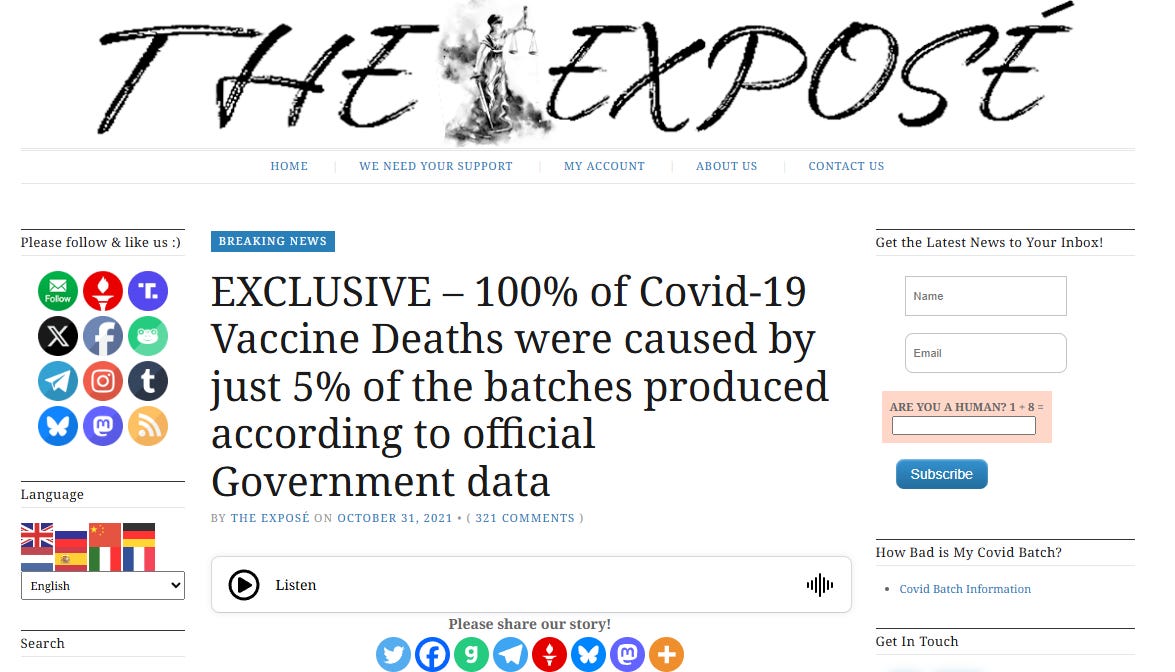
At the time, Team Enigma consisted of Mike Yeadon, Alexandra Latypova, and Craig Paardekooper. Latypova has repeatedly claimed that she made the original discoveries, which were later merely confirmed by Paardekooper and others.
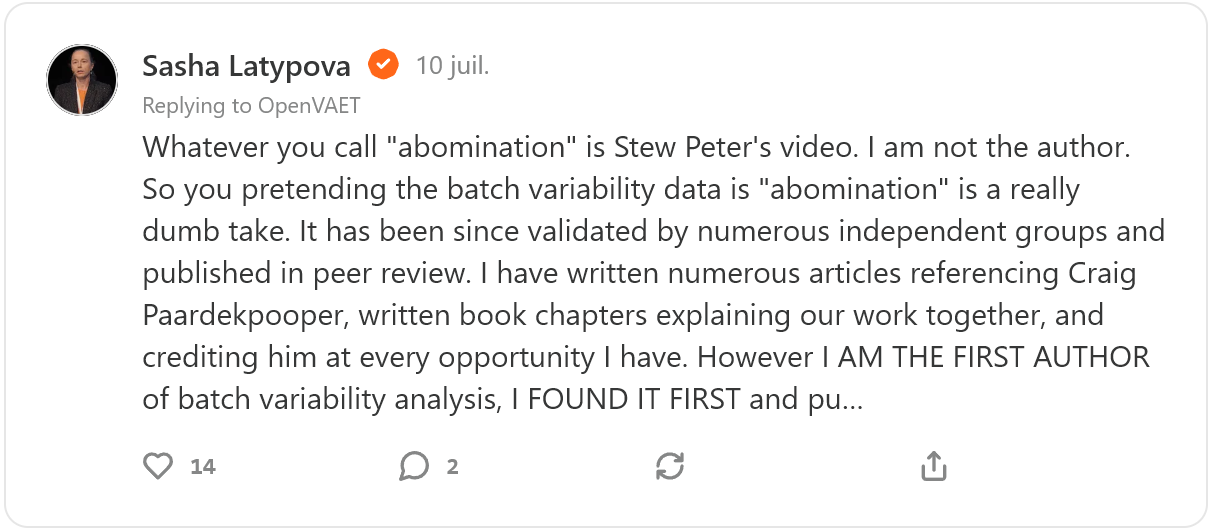
Yeadon (who didn’t read the memo) has described the credit differently,85 as has Dr. Jessica Rose (a talented researcher whom Latypova has attacked repeatedly).86 In their account, Paardekooper made the initial observations, and Latypova later wrote up the article.
Whoever bears the responsibility for this disastrous work… the article relied solely on U.S. VAERS data and presented its analysis without any caveats about the dataset’s or the analysis’s limitations. It combined:
- uncleaned raw data (creating substantial noise in lot-number fields and missing details contained only in free-text reports),
- pre-processing choices that materially affected results (including merging some lots and treating controls differently),87 and
- non-normalized assumptions (including treating batches as if they contained the same low and equal numbers of doses).
The result was an argument about batch-to-batch variability - an issue already discussed publicly following reporting in March 2021 - under the most terrible arguments possible, and framed in a way that invited a much stronger inference: that certain U.S. states were being “targeted” with “bad lots.”
Although Latypova was aware of the EMA leak materials - which would have been a primary source of prime relevance - she did not reference the EMA in this context until late January 2022.88
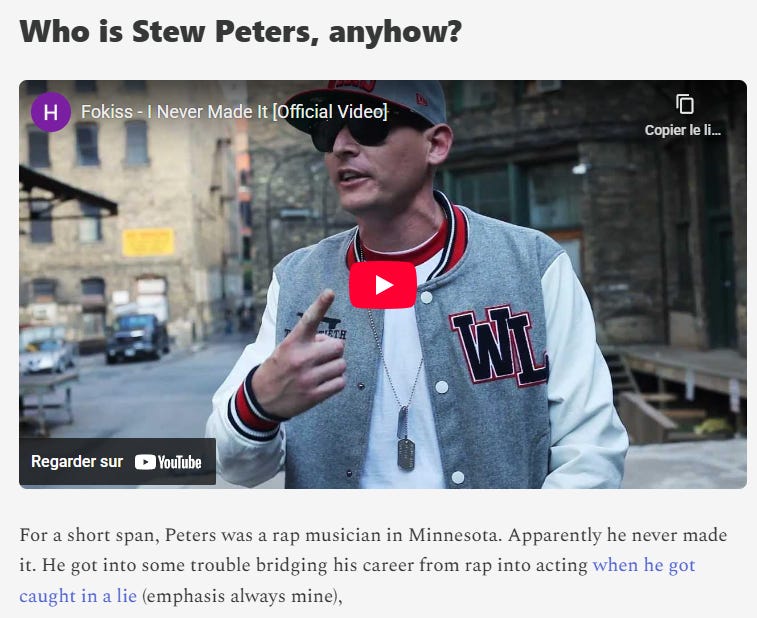
The article was then amplified by Stew Peters and Jane Ruby - in their usual measured tone - starting on November 2, 2021.89
Stew Peters - ex rapper & bounty hunter, who constantly spews antisemitism on X/Twitter90 - has already been covered satisfyingly by Mathew Crawford.91
And Jane… well, the one & only filter-queen, endangering children with opioids on her $2 billion Indivior fraud, has been discussed here, a few months ago.
With amplification from these two accounts - whose combined reach was in the hundreds of thousands - Latypova’s visibility in COVID-19 vaccine-critic circles rose sharply.
“Howbad.info”
In November 2021, Team Enigma launched howbad.info and added Dr. Jessica Rose and Walter Wagner to the group.92
As noted above, much of the site’s technical work appears to have been done by Craig Paardekooper, who described himself as “a researcher of great intellect” and promoted numerology-style interpretations of batch identifiers,93 94 including the idea that manufacturers embedded “toxicity codes” in lot references.95
Latypova appeared on the Stew Peters Show on January 7, 2022, in an episode modestly titled “Hackers Reveal DEADLY Jab Lot Numbers, HORRIFIC Pfizer Teen Trial Data and MORE!”96
Despite that framing, no hacking was documented there; the discussion relied on publicly circulating interpretations of batch/lot data. Latypova also changed key assumptions about batch size (moving from 6,000 doses per batch to figures in the millions). That change alone nullified her current published conclusions, yet no clear correction or erratum accompanied it.
She emphasized the need to protect anonymous activists and directed viewers to howbad.info, where Team Enigma would continue publishing.
On January 21, 2022, Latypova appeared for the first time on the Jane Ruby Show to discuss the EMA leak materials, presenting the discussion as a major revelation long after the initial leak - while still not explicitly naming the EMA in that segment.97
The following day, The Daily Beast paid tribute to the quality of the work of Sasha & her colleagues.98
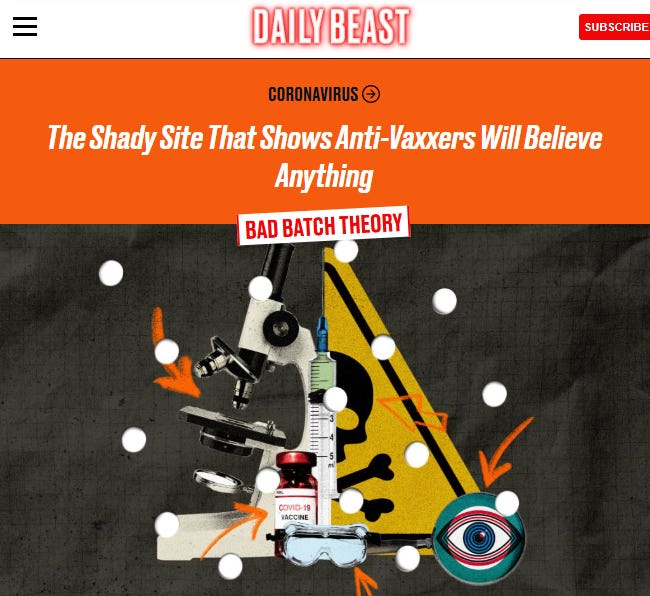
One consequence of this period is that discussing batch variability with mainstream researchers is unnecessarily difficult: the topic often requires substantial time to convince the person you’re talking to that you’re not a complete lunatic, because so much demonstrably false material circulates in the same channels that even legitimate safety arguments are presumed worthless at first glance.
Bitchute, “Team Enigma,” and first public events
In February 2022, Sasha moved to the video-hosting platform Bitchute. There, she began explicitly referencing the EMA leak materials and published analysis of them, along with broader commentary on the regulatory framework surrounding the COVID-19 vaccines, in an apparent effort to bolster her credibility.99
She leveraged her growing visibility - and, at times, arguments that I consider legitimate, such as criticisms of compliance with good practices in parts of the vaccine development process100 - to gain access to working groups that included more technically serious participants than figures such as Peters, Martin, or Ruby.
For example, she began collaborating with Hedley Rees and publicly released several conversations with him.101 102 103
At the same time, she continued to promote other claims, including that “unknown ingredients” had been introduced,104 that “placebo batches” were being released, and that “self-assembling nano-robots” were present in the vials.
Interviews with “gifted analysts” such as Shimon Yanowitz (presented as holding a PhD),105 nutritionist David Nixon,106 and a series of short videos framed around unconventional claims about lipids and sugars contributed to the degradation of the overall quality of the debate.107 108
She also developed a public collaboration with Jane Ruby, including coordination that was at times - conveniently - communicated openly, for example, via Telegram.109
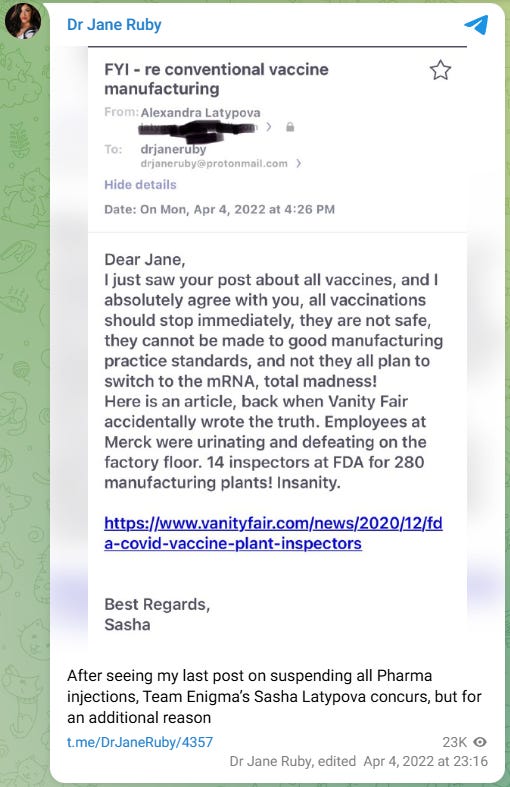
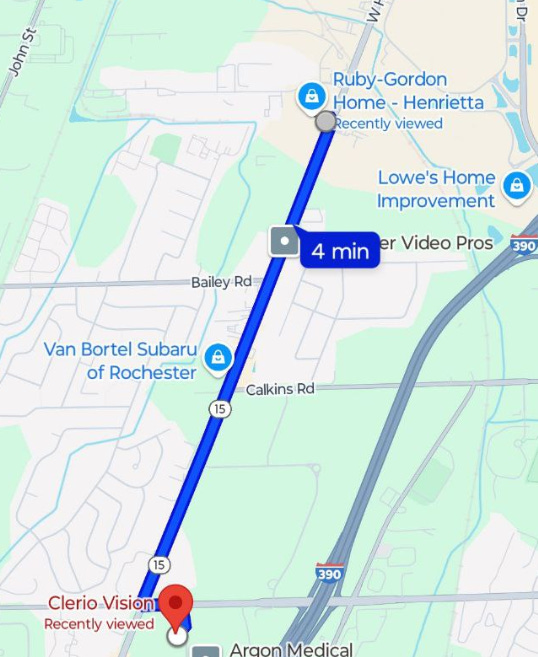
I do not have definitive evidence for when Sasha and Jane Ruby first met. What can be said is that they give differing accounts of the timing. It is also notable that Ruby worked at the University of Rochester during the same period as Saara Tötterman,110 111 and that Sasha, Jan Mikael, Saara, and Jane all lived in the same Rochester-area milieu for years (see below: Clerio Vision and Ruby-Gordon were within walking distance of each other).
Sasha’s credibility was further boosted, at least early on, by appearing at live events alongside other emerging personalities in this ecosystem. All of the figures promoted in these settings later became associated with claims that were demonstrably false or implausible.

For example, she appeared alongside David Martin, who has made a series of extraordinary public claims (including “I saved billions of people,”112 “chromosomes are an antenna,”113 and “I lost my legs,114 but they grew back”),115 Opioids-mythomaniac-Ruby,116 Graphene-Kingston,117 and Ziarco-Mike Yeadon (another Pfizer-made multi-millionaire).118 119
Throughout this period, Sasha continued posting regularly on Bitchute and appearing in frequent interviews, including with Jane Ruby, pushing consistently the claim that the vaccines are a “bio-weapon” - a framing that has made many safety advocates inaudible by public officials.
2022 through late 2023: “nanobots,” Rathma Cult, and Katherine Watt
In September 2022, Sasha’s focus on “nanobots” was further cemented by an interview with Rathma Cult’s Ana Mihalcea,120 121 a prominent promoter of related claims. A short excerpt (about three minutes) is worth watching to understand the comical value of the exchange.122
In November 2022, she held her first public meetings with Katherine Watt, described here as an independent legal researcher, who would later become one of her main collaborators and a recurring source of legally questionable arguments.123 Sasha also authored an article on nano-robots for TrialSiteNews, which met a large audience.124
For brevity, I will not summarize every claim from that period and will focus below on what I consider the most consequential - or most problematic - ones.
On January 21, 2023, Sasha spoke at a conference in Stockholm,126 which she promoted as a milestone for her work. In that talk, she recapped her conclusions and stated, among other things, that the Department of Defense was not “just doing logistics” but was “running the whole thing,” and that “Pfizer delivered the fraud they were ordered.”
By this point, Sasha was appearing alongside figures such as Dr. Robert W. Malone and Dr. Pierre Kory, among others.
She began encountering more visible push-back during a discussion with Dr. Meryl Nass on August 23, 2023,127 connected to Nass’s publication “The WHO’s Proposed Amendments Will Increase Man-Made Pandemics.”128
For viewers who had not yet made up their minds about controversies surrounding SARS-CoV-2, the exchange offered an occasion to see Sasha’s “no virus” orientation confronted with a physician known for her biowarfare-related expertise. During the discussion, sadly, Sasha just attempted to argue that cholera’s mode of transmission was not known, citing what she described as a 1971 Soviet manual - an argument that appeared to cause some perplexity to an extremely polite Dr. Nass.
On September 20, 2023, she promoted another “nano-robots” commentator, Mat Taylor, in a Substack post she has since deleted ; Henjin preserved it and later re-posted it on X.129
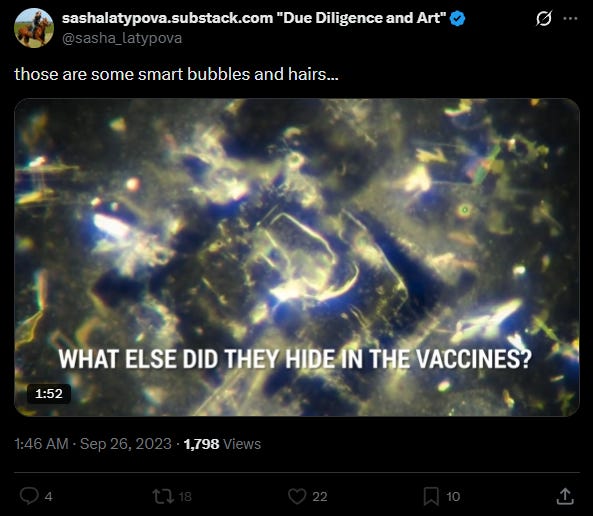
Two days later, on September 22, 2023, Sasha clarified on Substack that, although graphene oxide was, in her view, likely present in the vaccines, she did not believe they contained mind-controlling nano-robots.130 Four days later, on September 26, however, she promoted another David Nixon video about “nanobots” on X/Twitter.131
Attacking Malone
A few months later, on December 18, 2023, Sasha - together with her close collaborators Mike Yeadon and Jane Ruby, published a series of attacks directed at Dr. Robert Malone. She later placed her article behind a paywall, as it conflicted with her subsequent narrative portraying herself as the innocent party who was attacked first.132 However, an archived version of the piece is still accessible.133
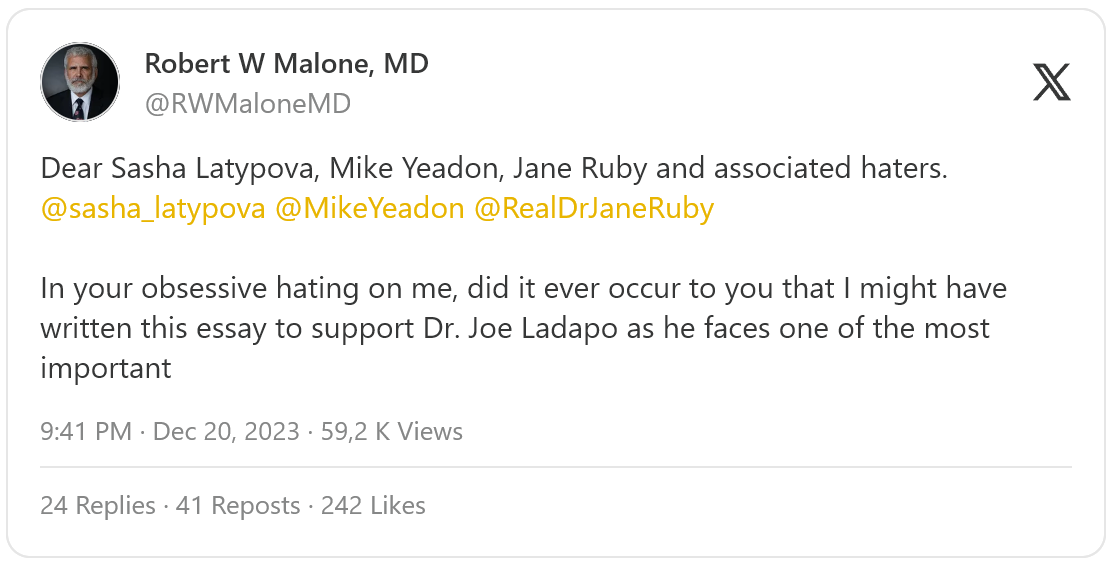
A week later, Malone responded on X by re-posting Sasha’s article with a brief comment.
Sasha then responded using a DARVO-style framing and insinuated that Malone’s past contracts made him a Department of Defense “servitor,” or equivalent.134 135
On January 16, 2024, the dispute reached a wider audience following an interview between Robert Malone and Ahmad Malik.136
Jikkyleaks publicly defended Malone against these attacks,137 after which Sasha attempted multiple times to identify him publicly (most recently last Christmas).
Sasha blocked me on X for the first time after several back-and-forth exchanges about what I saw as contradictions in her positions - Sasha was, for example, arguing at the time that investigating anomalies and indicators of fraud in Pfizer-related data was pointless, while she was at the same time pretending to have sufficient expertise to assist Brook Jackson and her legal team in their essential effort.138
In December 2024, Sasha appeared to definitively abandon the “nanorobots in the vaccine” narrative (which she had been one of the principal initiators of).139
“80% miscarriages” during the Pfizer trial
Things stayed relatively quiet - meaning Sasha attacked continuously Malone and Jikkyleaks - until June 4, 2025, when she gave a highly public interview with Dr. Naomi Wolf, during which Sasha made several grotesque claims.
To be clear, I have great respect for Naomi Wolf. Aside from DailyClout’s work on Pfizer documents which has produced several key findings, she has spoken publicly - and, in my view, courageously - about potential fertility-related risks associated with mRNA vaccines.
Wolf reached a conclusion broadly similar to mine: that fertility risks deserve serious attention. She has interviewed many capable contributors and, for example, has recently discussed Josh Guetzkow’s findings on miscarriage risk.140 She is not responsible for everything her guests say, and she has never presented herself as a statistics expert.
At the same time, like anyone, she is vulnerable to confirmation bias. In this interview, she did not challenge Sasha’s rapid succession of claims and instead deferred to Sasha’s asserted expertise.141
Most of what Sasha says in this interview - apart from inclusion and exclusion criteria - is incorrect.
For example, “TrialMax” app was the tool used to monitor adverse events during the Pfizer trial, whereas “V-safe” was a post-authorization monitoring system launched after EUA, in December 2020.142 143
She also claims there were 3,000 pregnant participants in the clinical trial. That figure is not remotely consistent with what is publicly documented, and one of the central objections to recommending these products in pregnancy is precisely the lack of robust pre-authorization safety data.144
More broadly, while fertility concerns are real - and fertility rates have fallen below trend in many western countries… if stillbirths had increased by 300% and miscarriages among vaccinated women were approaching 80%, the societal impact would have been visible at scale, including through large numbers of school closures since 2022.
Dr Ah Kahn Syed has already catalogued Sasha’s errors in detail following the video’s release.

Jan Mikael’s involvement, and more contradictions
After the interview, as criticism intensified, Sasha lied again, claiming that her husband “was never involved in her work.”145 However, Hedley Rees has since stated that Jan Mikael participated in a call with Senator Ron Johnson in which Rees was also present.146
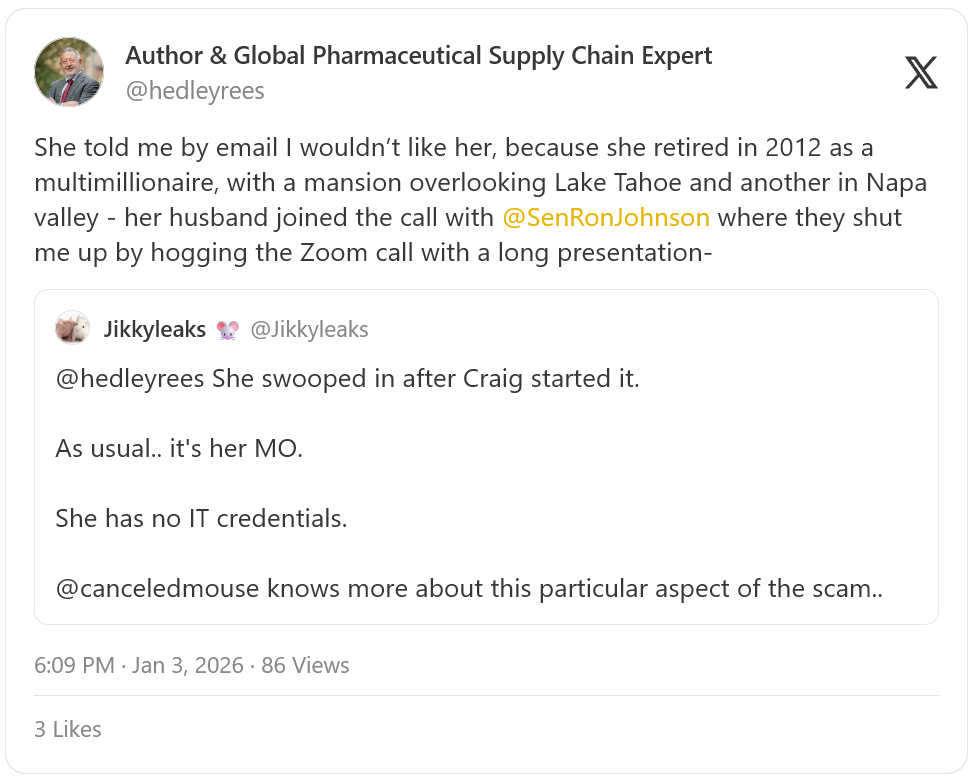
Discordant with her habit of laughing at her critics, Sasha threatened him publicly, the next day, with a SLAPP if he had in mind to testify to her sabotages of their professional relationship.147
Since early 2025, Sasha has focused her efforts on further splitting the MAHA base with out-of-touch-with-reality rage-baits and demands for an immediate ban on all mRNA COVID-19 vaccines.
It is hard to reconcile how Sasha can be a prominent supporter of Dr. Mary Talley Bowden,148 an MD persecuted for her fight for early treatments, while at the same time consistently explaining that viruses aren’t real - and while also promoting the “no-virus” polemicist Jamie Andrew.149 150
It is equally hard to reconcile how she went from DNA being part of a “well-known whole field of epigenetics” in 2021,151 to Sasha’s current position that “DNA is merely a flawed mathematical model.”152
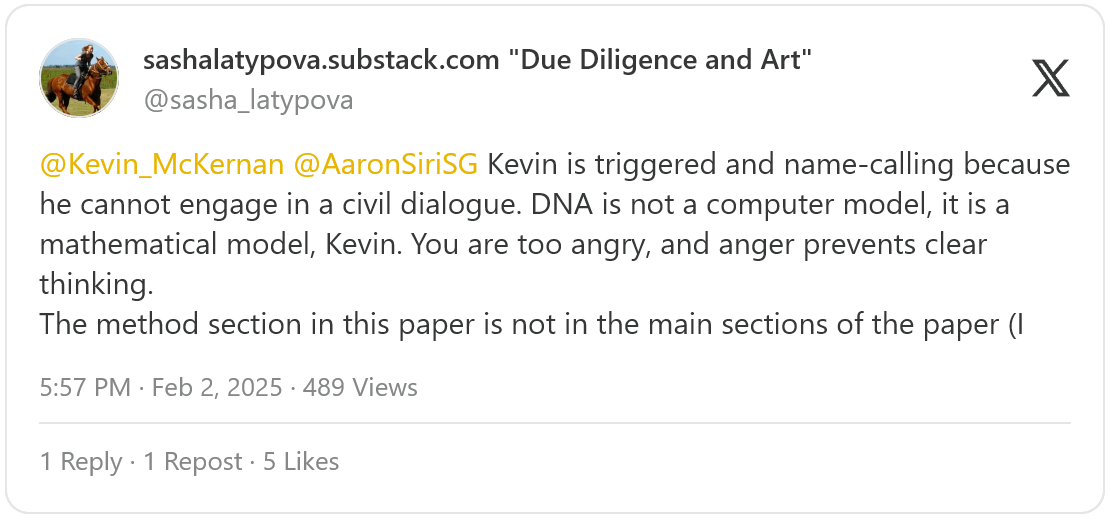
And it is also hard to reconcile how she can claim to have “always been supportive of Kevin McKernan and his colleagues’ work on DNA contamination”153 while simultaneously holding the positions above.
Conclusion
We could carry on and break down another 200 lies and abuses from Sasha Latypova. We could mention her current “Dutch lawsuit against Bill Gates” (a joke with no chance of going anywhere, aside from providing comic relief for Gates’s lawyers), for example, but this article is already long enough, and if you’ve read this far, the pattern should now be plain.
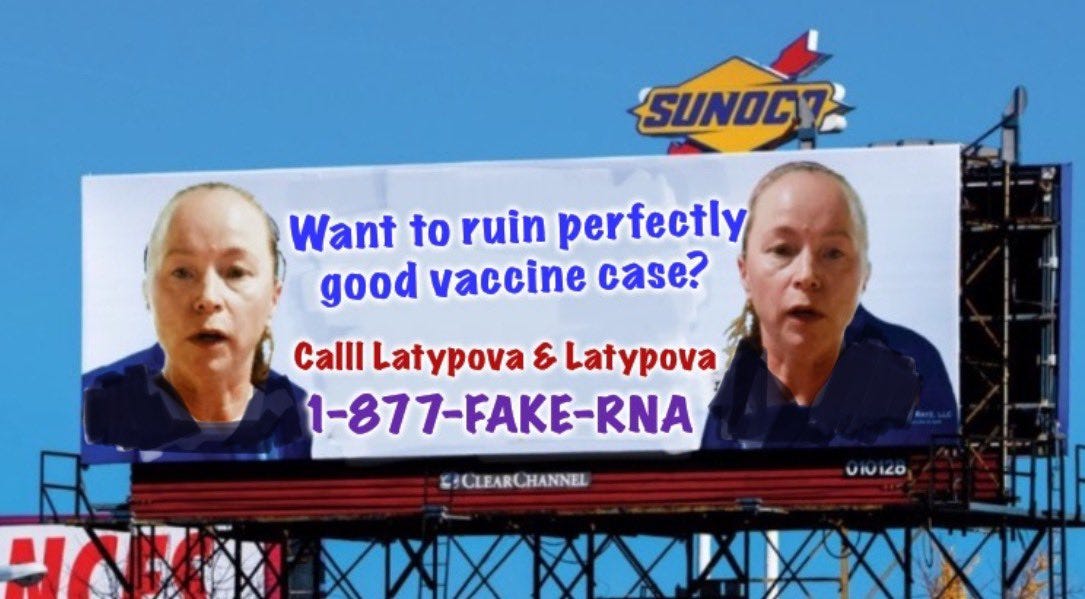
Latypova did not simply “get a few things wrong” while trying to help. Over and over, she placed herself at the center of stories she did not properly source, did not rigorously qualify, and did not responsibly correct. She used the lowest quality of proof to promote the most extreme conclusions - bioweapon, political targeting, nanobots, secret ingredients, mass miscarriage - and then used the resulting notoriety to move up the credibility ladder: from fringe Telegram bravado, to viral shows, to “working groups,” to proximity with people doing serious work, while leaving behind a trail of contaminated arguments that others must clean up later.
This is not a harmless personality dispute. It is a structural problem for the entire “safety and accountability” effort. Every time a prominent voice launders sloppy analysis into moral certainty, it becomes easier for institutions to dismiss all criticism - especially the criticism that is correct, boring, and heavily documented. The practical result is predictable: regulators and courts keep their posture, the media keep their script, and victims are left with theatrics instead of remedies.
Some readers will want a simpler ending - a clear origin story, a single motive, a clean villain. Life rarely cooperates. But we do not need to diagnose what is in someone’s heart to judge what is on the record.
The record shows a professional trail of nepotism, appropriation of public developments to private ends powered by Pfizer’s generous funding, and, since Latypova’s inception in the debate, repeated exaggeration, repeated misrepresentation, repeated rewriting of history, repeated relations with most questionable actors, and repeated intimidation when challenged - paired with a convenient habit of outsourcing technical credibility to whichever ally is useful this month, and then attacking that ally once they stop cooperating.
Whatever blend of ego, opportunism, and incompetence - or ideology - drives this, the effect is the same: the discourse degrades, and the people who most deserve seriousness - those whose loved ones have been injured or who have been injured themselves - are forced to live inside a circus.
So here is the standard I propose - simple, unglamorous, and non-negotiable:
- If you make a claim, cite the primary material.
- If the data are messy, say so loudly, and do not smuggle certainty through ambiguity.
- If you are wrong, correct it clearly, in the same venues and at the same volume you used to spread it.
- If you cannot meet that bar, you do not lead ; you listen. Otherwise, expect scrutiny from the public you are trying to fool.
To quote Solzhenitsyn: the simple step of a courageous individual is not to take part in the lie. In 2026, that duty is not reserved for “the other side.” It applies equally to those who claim to oppose the prevailing narrative while feeding their audience stories that collapse under basic scrutiny. We cannot build accountability on sand and then act surprised when it won’t carry weight in court - or in history.
I wrote this not to demand purity, but to demand competence. We have enough real scandals, enough primary documents, enough demonstrable misconduct, and enough damaged lives that we do not need fantasies. If we want justice, we need fewer influencers and more adults: fewer performative revelations and more disciplined, verifiable work. And if certain public figures cannot stop manufacturing noise, then the most ethical thing the rest of us can do is what we should have done earlier: stop amplifying them, stop excusing them, and stop letting them set the terms of the debate.
💬 Join the conversation
Want to like, comment, or share this article?
Head over to our Substack page to engage with the community.
Likes, comments, and shares are synchronized here every 5 minutes.
💬 Join the conversation
Want to like, comment, or share this article?
Head over to our Substack page to engage with the community.
Likes, comments, and shares are synchronized here every 5 minutes.